
Cats are notorious for their love of sleep, spending up to 16 hours a day snoozing in various poses that have become the hallmark of feline relaxation. But beyond their adorable appearance, these sleeping positions can reveal fascinating insights into your cat’s mood, behavior, and even health.
From some of the most common cat sleeping poses, we will explore their possible meanings and what they might be trying to tell you about your feline friend.
1. The Classic Curl-Up

One of the most iconic cat sleeping positions is the curl-up, where your cat wraps its body into a tight ball, often with its paws tucked in and tail wrapped around its body. This pose is often associated with feelings of safety, security, and contentment.
Cats will frequently adopt this position when they’re feeling relaxed or sleepy, as it allows them to conserve energy and protect themselves from potential threats. If your cat curls up in this way, it may be a sign that they feel comfortable and secure in their environment.
2. The Stretch

The stretch is another common sleeping pose for cats, where they extend their body outwards, often with one or both front legs stretched out to the sides. This position can indicate a cat’s flexibility and range of motion.
Cats may adopt this position when they’re feeling playful or curious, as it allows them to stretch and move freely. However, if your cat is consistently stretching in this way, it could be a sign that they’re not getting enough exercise or are experiencing joint pain.
3. The Splayed-Out Position
The splayed-out position is characterized by your cat’s body being stretched out in different directions, often with legs splayed to the sides and tail hanging loose. This pose can indicate a cat’s comfort level with its surroundings.
Cats may adopt this position when they’re feeling relaxed or sleepy, as it allows them to conserve energy and take up more space. However, if your cat is consistently splayed out in this way, it could be a sign that they’re not getting enough stimulation or are experiencing sensory overload.
4. The Sphinx Pose
The sphinx pose is where your cat assumes the position of an Egyptian sphinx, with its front legs and head raised off the ground. This pose can indicate a cat’s sense of self-awareness and confidence.
Cats may adopt this position when they’re feeling proud or assertive, as it allows them to show off their physical strength and agility. However, if your cat is consistently assuming this pose, it could be a sign that they’re experiencing anxiety or stress.
5. The Burrower
The burrower is where your cat curls up in a tight ball and tucks its head into its chest, often with paws tucked in close to the body. This pose can indicate a cat’s need for security and protection.
Cats may adopt this position when they’re feeling anxious or scared, as it allows them to retreat into a safe space and feel protected. If your cat is consistently burrowing in this way, it could be a sign that they’re experiencing stress or anxiety in their environment.
6. The Pounce
The pounce is where your cat assumes the position of a predator, with its body tense and ready to spring into action. This pose can indicate a cat’s hunting instincts and prey drive.
Cats may adopt this position when they’re feeling playful or curious, as it allows them to engage in natural behaviors like stalking and pouncing on toys. However, if your cat is consistently assuming this pose, it could be a sign that they’re experiencing pent-up energy or frustration.
7. The Kneader
The kneader is where your cat assumes the position of a kitten, with its front legs folded under its body and tail wrapped around its backside. This pose can indicate a cat’s contentment and relaxation.
Cats may adopt this position when they’re feeling comfortable or sleepy, as it allows them to relax and conserve energy. If your cat is consistently kneading in this way, it could be a sign that they feel secure and happy in their environment.
8. The Tail-Twitcher
The tail-twitcher is where your cat’s tail is held high and twitching rapidly, often with the legs stretched out to the sides. This pose can indicate a cat’s excitement or agitation.
Cats may adopt this position when they’re feeling playful or curious, as it allows them to express their emotions and engage in natural behaviors like hunting and pouncing. However, if your cat is consistently twitching its tail in this way, it could be a sign that they’re experiencing stress or anxiety.
Conclusion:

Cat sleeping poses can reveal fascinating insights into your feline friend’s mood, behavior, and health. By recognizing these different positions, you can better understand what your cat is trying to tell you about their needs and emotions. Whether your cat is curled up, stretched out, or pouncing around the room, there’s always something interesting going on beneath the surface.
So next time you catch your cat snoozing in a particularly adorable pose, take a closer look and see if you can decipher what they’re trying to say. Who knows? You might just learn something new about your furry friend!
Recommended products
-

Blueberry Swirl Cushion Beanbag Pet Bed – Semi-Enclosed Calming Bed
HKD $350 -
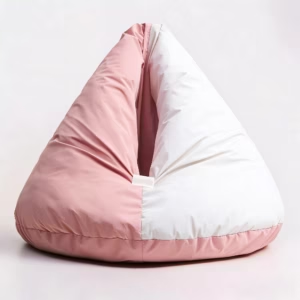
Strawberry Milk Cushion Beanbag Pet Bed – Semi-Enclosed Calming Bed
HKD $350 -

2-in-1 Grey Pet Tent Bed – Triangle Cave & Convertible Cushion
HKD $320 -

Lemon Lime Fizz Cushion Beanbag Pet Bed – Semi-Enclosed Calming Bed
HKD $350 -

Mocha Mousse Cushion Beanbag Pet Bed – Semi-Enclosed Calming Bed
HKD $350 -

2-in-1 Blue Pet Tent Bed – Triangle Cave Convertible Cushion
HKD $320